

The World Cup Trophy: Design, History, Facts & Replicas
As the world begins building towards the 2026 FIFA World Cup across the United States, Canada and Mexico, interest in the trophy itself is growing. What is the world cup trophy actually made of? Who designed it? Is it really gold? What happens to it after the final? And what became of the original Jules Rimet trophy that preceded it?
This guide answers all of those questions in full - covering the history, materials, value, famous thefts, and the fascinating rules around who gets to keep the FIFA World Cup trophy. And if you're looking for a replica world cup trophy in the style of the real thing for your own club, league or event, browse our range below.
World Cup Trophy Replicas Similar to the Real Thing

Winning Goal Football Award (Gold & Black)


Winning Goal Football Award (Gold & Black)
Price
From £13.50
Winning Goal Football Award (Black & Silver)


Winning Goal Football Award (Black & Silver)
Price
From £13.50
Grey/Gold Filled Plastic Football Column Trophy
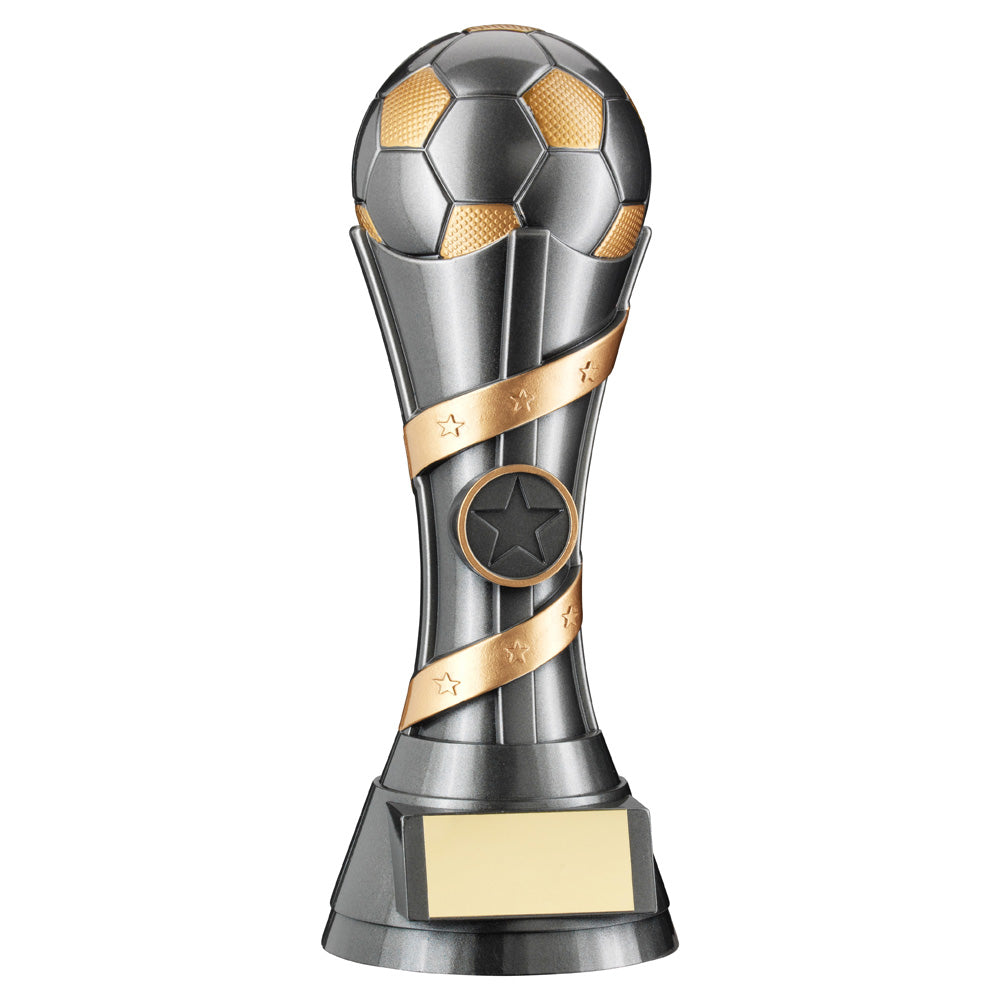
Grey/Gold Filled Plastic Football Column Trophy
Price
From £9.50
Winning Goal Football Award - Gold & Black


Winning Goal Football Award - Gold & Black
Price
From £9.50
Winning Goal Football Award - Silver & Black


Winning Goal Football Award - Silver & Black
Price
From £9.50
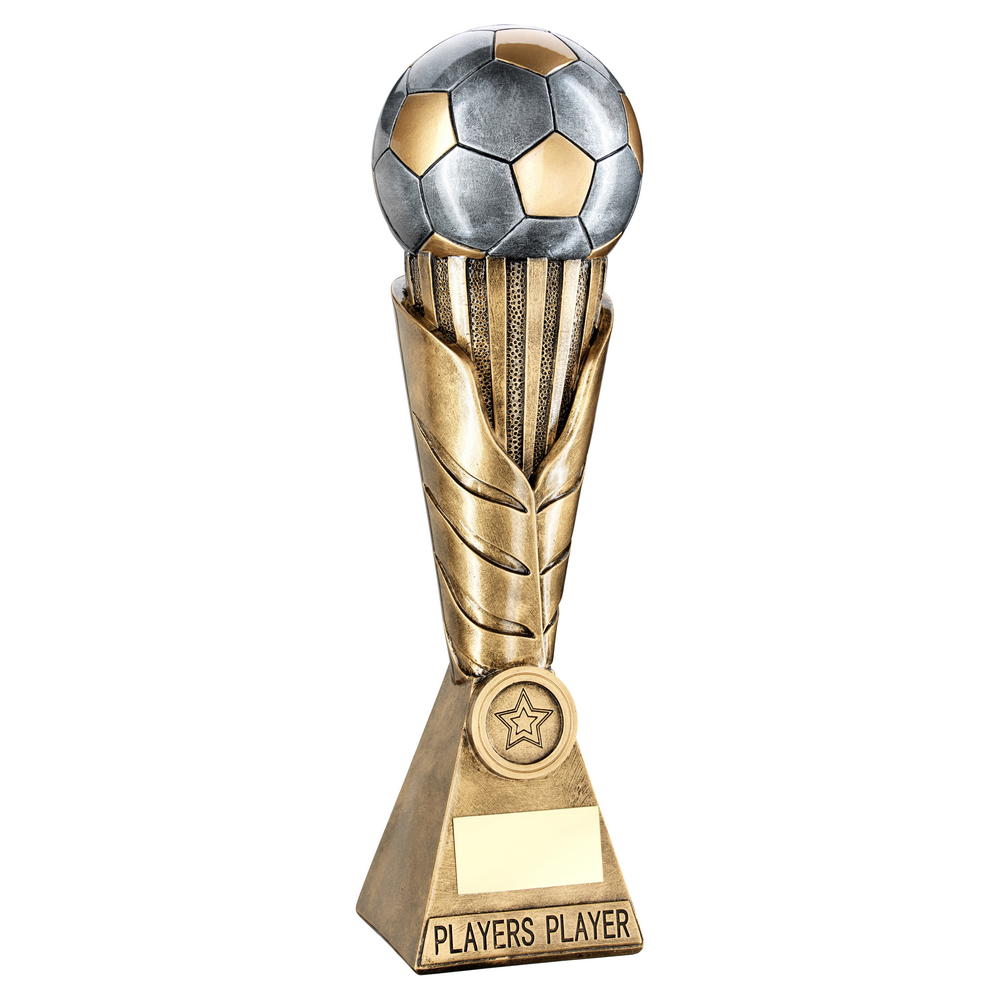
Bronze/Pewter/Gold Football On Leaf Burst Column Trophy - Players Player (12in Height)
Sold out
Bronze/Pewter/Gold Football On Leaf Burst Column Trophy - Players Player (12in Height)
Price
£23.99
Bronze/Pewter/Gold Football On Tri-Mesh Column Trophy - Managers Player
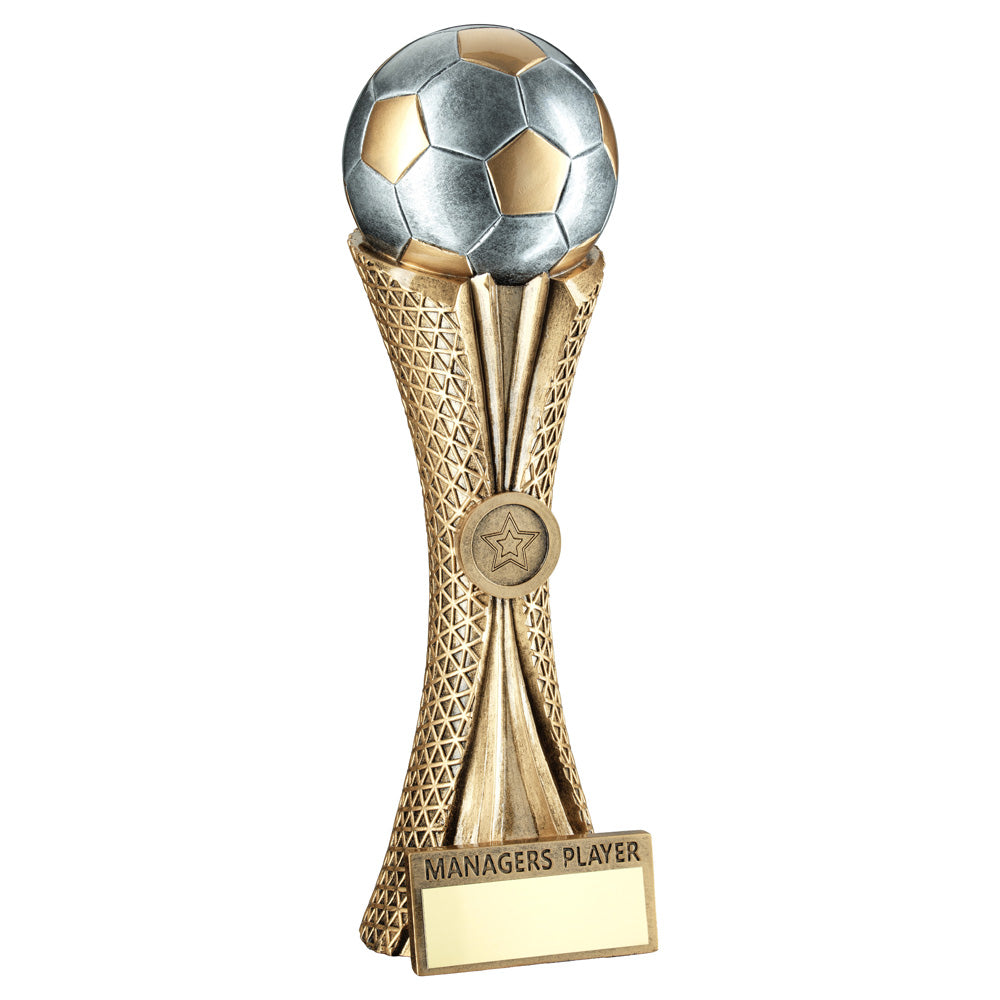
Bronze/Pewter/Gold Football On Tri-Mesh Column Trophy - Managers Player
Price
£25.50
Bronze/Pewter/Gold Football On Leaf Burst Column Trophy - Parents Player (12in Height)
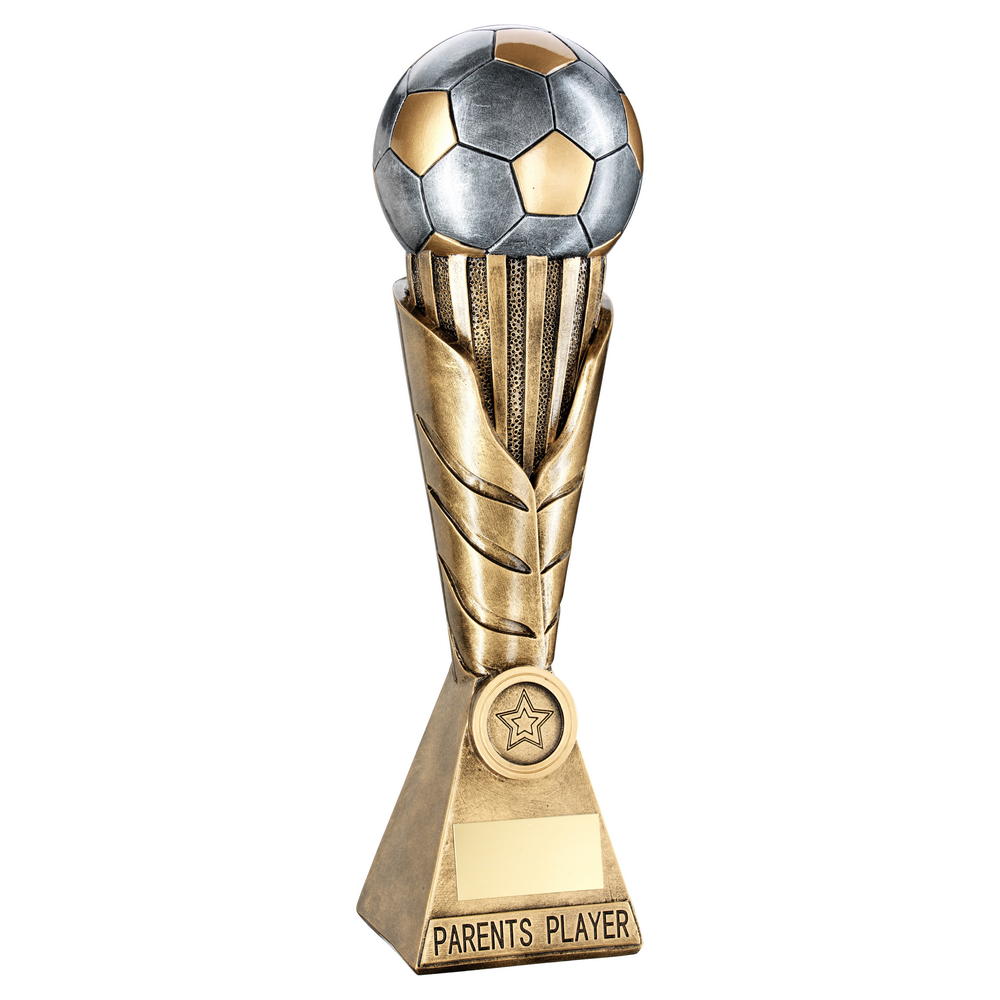
Bronze/Pewter/Gold Football On Leaf Burst Column Trophy - Parents Player (12in Height)
Price
£23.99
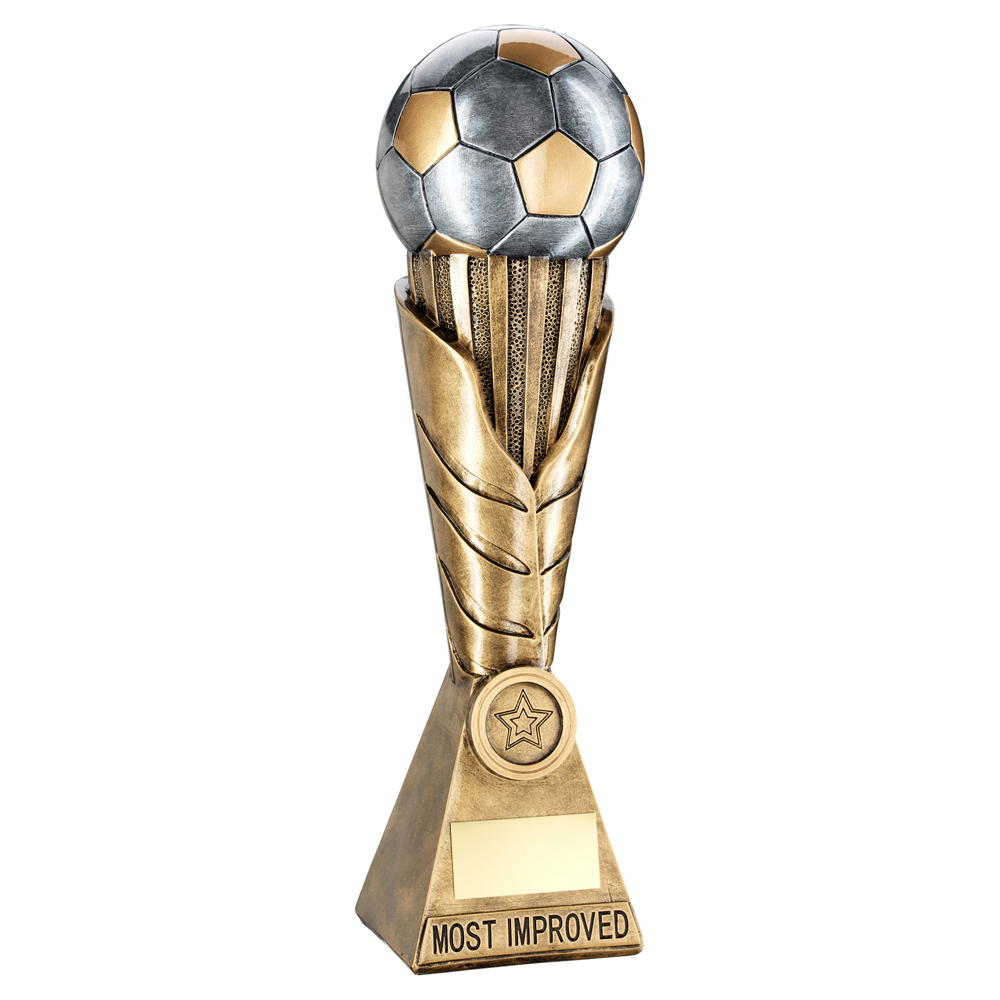
Bronze/Pewter/Gold Football On Leaf Burst Column Trophy - Most Improved (12in Height)
Sold out
Bronze/Pewter/Gold Football On Leaf Burst Column Trophy - Most Improved (12in Height)
Price
£23.99
Bronze/Pewter/Gold Football On Tri-Mesh Column Trophy - Parents Player
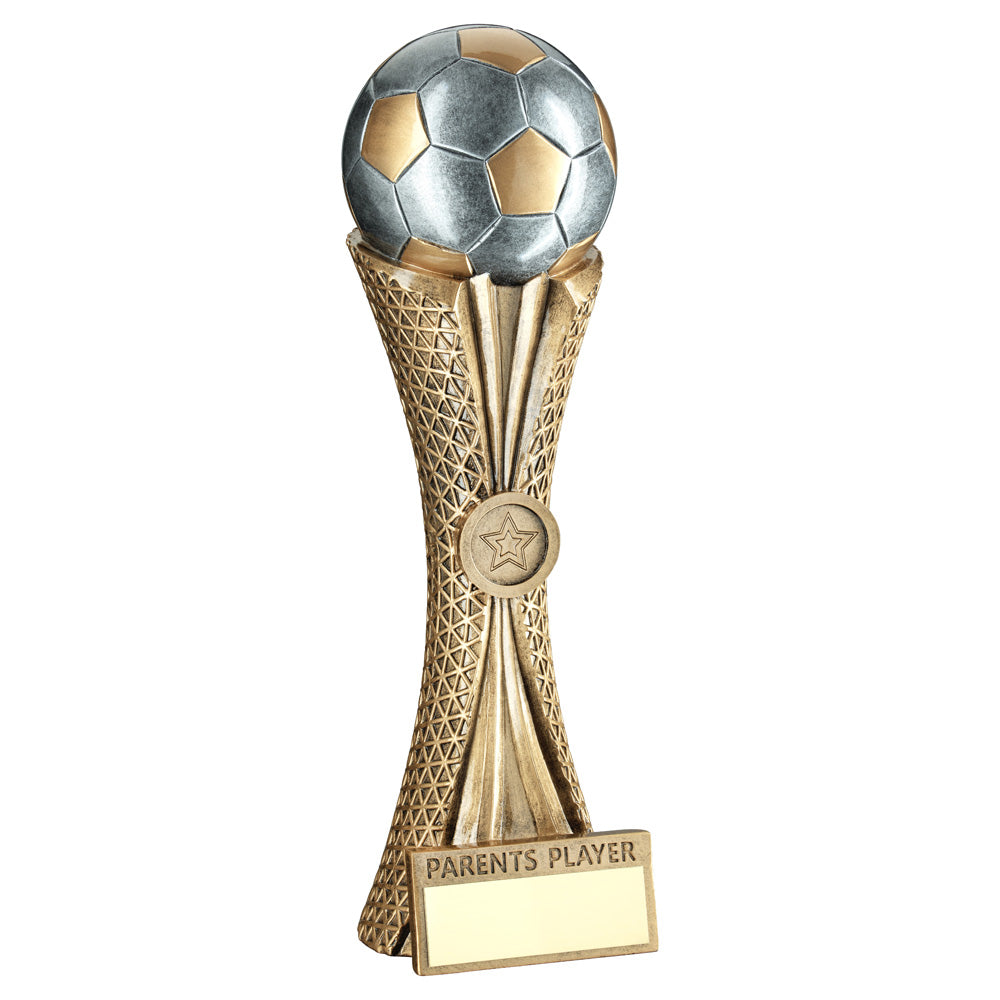
Bronze/Pewter/Gold Football On Tri-Mesh Column Trophy - Parents Player
Price
£25.50
Free Delivery
On orders over £99
Top-Rated
5 Star Rated by 750+ Reviews
30+ Years of Experience
Fast, reliable and consistent
FIFA World Cup Trophy: Key Facts at a Glance
Before diving into the full story, here are the essential specifications of the current FIFA World Cup Trophy at a glance.
| Specification | Detail |
|---|---|
| Height | 36.5 cm (14.4 inches) |
| Weight (total) | 6.175 kg (13.6 lb) |
| Gold content | 5.0 kg of 18-carat (75%) gold |
| Base diameter | 13 cm (5.1 inches) |
| Base material | Two layers of malachite semi-precious stone |
| Interior | Hollow (solid gold would exceed 70 kg) |
| Designer | Silvio Gazzaniga, Milan, Italy |
| Manufacturer | GDE Bertoni, Paderno Dugnano, Italy |
| First awarded | 1974 FIFA World Cup, West Germany |
| First captain | Franz Beckenbauer (West Germany) |
| Current holders | Argentina (2022 FIFA World Cup) |
| Location | FIFA World Football Museum, Zürich, Switzerland |
What Is the World Cup Trophy Made Of?
The FIFA World Cup trophy is made of 18-carat gold - that is, gold with a purity of 75% - with a base formed from two bands of malachite, a distinctive green semi-precious stone. It is genuine gold, but it is not solid gold all the way through.
This distinction trips up a lot of people. The trophy has a hollow interior. If it were solid gold, the maths is simple: at the dimensions it stands, it would weigh somewhere between 70 and 80 kilograms - far too heavy for any captain to lift above their head. The actual weight, including the malachite base, is 6.175 kilograms (about 13.6 lb), of which the gold shell accounts for 5.0 kilograms. That gold content, as of late 2025, is worth approximately $400,000 in raw material value alone.
The choice of malachite for the base was deliberate. The mineral's rich, banded green tones create a striking visual contrast with the gold above it, and malachite has long been associated with prestige and protection across cultures. The two layers sit at the base's 13 cm diameter, and the underside of this base carries something equally significant: the engraved name of every nation that has won the World Cup since 1974.
So: is the world cup trophy real gold? Yes. Is it solid gold? No - but the gold that is there is the genuine article, and the trophy is far more valuable than its raw metal content would suggest.
How Much Is the World Cup Trophy Worth?
The short answer: nobody really knows, because the FIFA World Cup trophy is a one-of-a-kind artefact and has never been sold. But experts and valuers consistently estimate its total worth at somewhere in the region of $20 million (approximately £15 million at current exchange rates).
That figure might seem surprising given the gold content alone is worth around $400,000. The difference lies in what the trophy represents. There is only one original FIFA World Cup trophy in existence. It has been lifted by the greatest footballers on earth at some of the most-watched moments in sporting history. It carries Franz Beckenbauer's fingerprints and Lionel Messi's too. There is no comparable object in world sport, which means standard valuation frameworks simply do not apply.
It is worth noting that the trophy FIFA presents at the final is the original - but the nation that wins it does not take it home. Winning nations receive a gold-plated bronze world cup trophy replica to keep permanently. The original is immediately returned to FIFA. We'll come back to that shortly, but it's worth knowing because it affects how the trophy's 'worth' is discussed: a winning nation's replica is valuable as a memento, but has none of the historical singularity of the real thing.
The production cost of the current trophy when manufactured in the early 1970s is estimated at $242,700 in today's money. From that modest-by-comparison starting point, the value has grown exponentially - driven purely by history, prestige, and the simple fact that it is irreplaceable.
Who Designed the FIFA World Cup Trophy?
The current FIFA World Cup trophy was designed by Silvio Gazzaniga, an Italian sculptor based in Milan. He was awarded the commission in 1971 after winning an international open competition that attracted 53 submissions from sculptors across seven countries.
Context is important here. FIFA needed a new trophy because Brazil had won the Jules Rimet trophy three times by 1970 and, under the original rules, earned the right to keep it permanently. FIFA opened the design brief shortly afterwards, and Gazzaniga's entry won what was, at the time, the most significant commission in the history of sport.
Gazzaniga described his vision in his own words: "The lines spring out from the base, rising in spirals, stretching out to receive the world. From the remarkable dynamic tensions of the compact body of the sculpture rise the figures of two athletes at the stirring moment of victory." This description captures the trophy's essence perfectly. Look at it closely and you can see exactly what he meant: two stylised human figures rise from a spiralling base, arms outstretched, holding the Earth itself at the peak.
The figures are deliberately abstract - they represent athletes universally, any nation, any player, any champion. This is a conscious design departure from the Jules Rimet trophy, which depicted a specific figure: Nike, the Greek goddess of victory. Gazzaniga's design is more modern and more inclusive.
The trophy was manufactured by GDE Bertoni, a specialist metalworking firm in Paderno Dugnano, northern Italy, and was first presented at the 1974 FIFA World Cup in West Germany. The first captain to hold it aloft was Franz Beckenbauer, as West Germany beat the Netherlands 2-1 in the final in Munich.
Gazzaniga went on to design the original UEFA Cup and the UEFA Super Cup. But the World Cup trophy remains the work he is best remembered for - a piece that has been touched by every World Cup winner from Beckenbauer to Messi, yet belongs, permanently, to no one.
The History of the World Cup Trophy: From Jules Rimet to 2026
The story of the World Cup trophy is, in many ways, the story of the World Cup itself. Two trophies have been used across the tournament's history.
The Jules Rimet Trophy (1930-1970)
The original World Cup trophy was commissioned before the very first tournament in 1930. It was designed by French sculptor Abel Lafleur and made of gold-plated sterling silver on a lapis lazuli base. It depicted Nike, the ancient Greek goddess of victory, holding a cup aloft - a classical form that reflected the era in which it was conceived. The trophy stood 35 cm tall and weighed 3.8 kilograms.
Originally called simply 'Victory', it was renamed the Jules Rimet Trophy in 1946 in honour of Jules Rimet, the French FIFA president who had championed the idea of a global football competition in the first place. Rimet had pushed through the vote to create the World Cup in 1929, and the trophy that bears his name was the physical embodiment of his vision.
The trophy made its journey to the first World Cup in Uruguay aboard the SS Conte Verde, sailing from Villefranche-sur-Mer in June 1930. Uruguay won that inaugural tournament and lifted the trophy for the first time. It would go on to be lifted by great champions of the game across four decades.
During the Second World War, the trophy had to be protected. Italy were the reigning champions in 1938, and when war broke out, Ottorino Barassi - the Italian vice-president of FIFA - secretly removed it from a Roman bank vault. He hid it in a shoebox under his bed to prevent the Nazis from seizing it. It stayed there throughout the war. The trophy survived.
By 1958 in Sweden, the Jules Rimet Trophy had taken on the iconic ritual that persists to this day. Brazilian captain Hilderaldo Bellini lifted it above his head in response to photographers' requests for a better angle - and every cup-winning captain since has done the same. That simple gesture is now one of sport's most recognisable images.
In 1966, the trophy became the subject of one of football's most infamous incidents when it was stolen just months before England were to host the World Cup. But the 1966 theft aside, the Jules Rimet trophy continued its journey, reaching a milestone in 1970 when Brazil - under Pelé - won the World Cup for the third time in Mexico. Under the original rules laid down by Jules Rimet himself, a nation that won three times earned the trophy permanently. Brazil took it home.
FIFA needed a new trophy, and so Silvio Gazzaniga's design was born. The Jules Rimet trophy was put on display in Rio de Janeiro - until 1983, when it was stolen again. This time, it never came back.
The Current FIFA World Cup Trophy (1974-Present)
Gazzaniga's golden trophy made its debut at the 1974 World Cup in West Germany and has been used at every tournament since. It has been lifted fourteen times across eleven different nations, from West Germany in 1974 to Argentina's Lionel Messi in 2022 - and next, it will be lifted again at the 2026 World Cup final in North America.
The trophy does not change from tournament to tournament. The same physical object is used each time. What does change is the underside of its malachite base: after each tournament, the winning nation's name is engraved there, joining every champion since 1974. It is one of the most elegant features of the trophy's design - a living record carried within the object itself.
Does the World Cup Winning Team Get to Keep the Trophy?
The team that wins the FIFA world cup does not get to keep the trophy. The answer has changed over the years, but this was shaped in large part by Brazil's 1970 triumph and the subsequent theft of the Jules Rimet Trophy in 1983.
Under the original rules, a nation that won the World Cup three times was entitled to keep the Jules Rimet Trophy permanently. Brazil reached that milestone in 1970 and duly took the trophy home to Rio de Janeiro - where it was stolen thirteen years later. When FIFA introduced the current Gazzaniga trophy for 1974, they decided this rule would not apply. No nation would ever permanently own the new trophy.
Instead, the winning nation at each World Cup receives a gold-plated bronze replica - officially known as the 'FIFA World Cup Winners' Trophy'. This world cup replica trophy is theirs to keep in perpetuity. The original trophy is handed back to FIFA after the tournament and returned to the FIFA World Football Museum in Zürich.
Prior to 2006, winning nations were allowed to hold the original trophy until the draw for the following World Cup. Since 2006, even that arrangement has ended. The original trophy returns to FIFA almost immediately after the final.
This arrangement resolves the theft risk that had plagued the Jules Rimet era, and it means the original trophy remains intact and singular. Every four years, the same golden object is lifted by a new champion - then returned to its home.
Where Is the World Cup Trophy Kept?
The FIFA World Cup trophy is kept at the FIFA World Football Museum in Zürich, Switzerland - sometimes referred to simply as the FIFA Museum. It is housed there permanently under high-level security and is not available for general public viewing without strict controls.
The trophy leaves the museum on only three types of occasion:
- First, the FIFA Trophy Tour: ahead of each World Cup, the trophy is taken on a global fan tour - sponsored by Coca-Cola since 2006 - visiting countries across the host regions and beyond so supporters can see it in person. Ahead of the 2026 World Cup, the tour is expected to visit multiple countries across North and South America, Europe, Africa, and Asia.
- Second, the trophy travels to the host nation for the final draw ceremony.
- Third, it is present at the World Cup Final itself, where it is handed to the winning captain on the pitch.
Outside of these occasions, the original FIFA World Cup trophy is in Zürich. It is not displayed in public exhibitions, it does not travel for sponsor events, and it does not visit club grounds or national football associations. Its time outside the museum is brief, controlled, and historically significant every time.
The World Cup Trophy at FIFA 2026: What to Expect
The FIFA World Cup 2026 - the first World Cup to feature 48 teams, and the first tournament held across the United States, Canada, and Mexico since 1994 - is shaping up to be the biggest in the competition's history.
The trophy itself will not change. Silvio Gazzaniga's design, introduced in 1974, will be carried to North America and presented to the winning captain at the final, wherever it is held. One more nation's name will be engraved on the underside of the malachite base, joining Argentina, France, Germany, Brazil, Italy, Spain, England, Uruguay, and the others who have stood on top of the world.
One detail worth noting: the space on the base for engraved winners' names is finite. Experts have estimated that the base will run out of space for engravings somewhere around 2038 to 2042, depending on how many unique nations win in that time. The 2026 winner will be among the last few names that can comfortably be added. At some point, FIFA will need to address this - whether through a new trophy design, an extension base, or some other solution. For now, though, the same singular object that Franz Beckenbauer first lifted in Munich is the one that will be presented in North America in the summer of 2026.
For football clubs, pub leagues, charity events, schools, and businesses looking to mark the occasion with their own football presentation, the 2026 World Cup provides the perfect backdrop. Below, we've brought together a selection of our finest world cup style replica football trophies - inspired by the prestige and aesthetics of tournament trophies - to help you create your own memorable award moment.
Thousands of Happy Customers
John Miller
What a first class service, excellent, trophies arrived after last minute order was made on time for our event. Highly recommended and will be spreading the word.
Alexander Davies
Amazing service. Fast delivery. Great communication services. Will be back again for sure.
Amy Simeon
Amazing customer service. John was great and responded to all our questions very quickly. The salvers arrived in super fast time and we were thrilled with them, especially the engraving. So thanks for the fabulous customer service and for the beautiful finished product. We will definitely be ordering again in the future.
Oliver Froom
Lovely product (mini replica trophy), immaculately engraved, and delivered very speedily. Price was the best I could find among similar suppliers. Attentive and obliging customer service. I recommend them unequivocally!
Veluxor
Amazing service and high quality engraved trophies, they can do whatever you ask for and delivery time is quick, came in 3 days of ordering. Will defo be using them again.
George Jeavons-Fellows
Extremely satisfied with the results of our new golf claret jug, engraved with our emblem, championship name and past winners. This was truly a great experience in customer service - start to finish - and I couldn't recommend them more for anyone looking to buy/design trophies.
Fiona Michie
Excellent service, great communication and quality products. I ordered a complete new set of trophies for our tennis club's annual tournament plus medals and they were all beautifully engraved, with excellent attention to detail. I'd recommend Gravesham Trophy Centre to anyone looking for good value, good quality trophies and great service.
Thomas Kiddie
After being let down by another supplier higher up on the search, Gravesham really delivered! Absolutely fantastic service, quality products for my budget and order to delivery well within my short time frame. I can’t recommend them highly enough. Thanks again
Ross Anders
I don't leave many reviews, but feel compelled to report on the exceptional quality of service I received from Gravesham Trophy Centre recently. From the first interaction the attentiveness of the staff has been nothing short of OUTSTANDING!
- Choosing a selection results in a full page refresh.
!